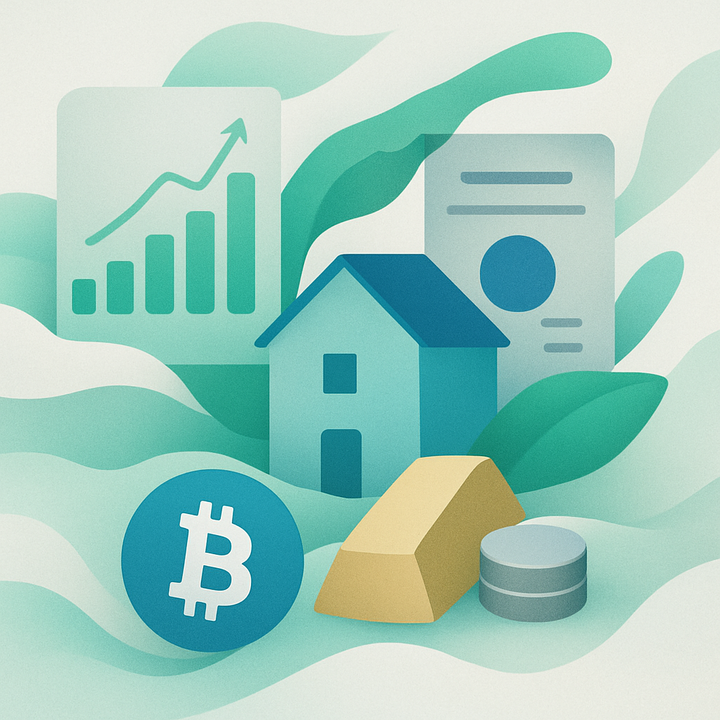
Introduction: The Strategic Value of Diversified Passive Income
Diversified passive income has become a fundamental part of personal finance, especially in 2024’s unpredictable global economic landscape. People everywhere are rethinking their financial planning and searching for new ways to generate stability and grow wealth. Diversified passive income stands out as a powerful solution, allowing individuals to reduce reliance on a single paycheck or investment while building resilience against market disruptions. This approach combines different income sources across asset classes, industries, and even countries to deliver ongoing cash flow with lower risk. Understanding the value of diversified passive income—and learning how to create it—is now a core skill for anyone serious about financial independence and security.
Understanding Diversified Passive Income
Diversified passive income means combining at least two or more independent income streams that require little daily effort to maintain. Unlike active income, which requires continuous time and input, passive income can keep flowing even when you’re not directly involved. Classic examples include rental property returns, dividend payments from stocks, or interest from bonds. However, truly diversified passive income takes things further by spreading your sources across different sectors. This could involve a mix of dividend stocks, real estate, digital royalties, automated online businesses, peer-to-peer lending, and income generated from intellectual property such as patents or online content. By distributing risk, diversified passive income shields you from the failure or volatility of any one sector, ensuring much more reliable cash flow overall. Advanced investors use modern portfolio theory and smart digital tools to optimize their passive earnings, maintain balance, and ensure growth over time.
Why Diversified Passive Income Is Essential for Modern Investors
Today’s investors face challenges such as inflation, sudden market corrections, and unpredictable job markets. Diversified passive income acts as a built-in risk reducer. When your wealth comes from several unconnected places, it becomes less vulnerable to individual economic or industry downturns. For example, if a tech stock’s dividend is slashed due to poor performance, your rental income, bond interest, or digital royalty payments can still support you.
Beyond basic safety, diversified passive income provides flexibility for long-term lifestyle planning. It can fund early retirement, enable sabbatical years, or support investment into new business ideas without jeopardizing your lifestyle stability. High-net-worth investors and growing numbers of regular savers are using these strategies not only for capital preservation but also enhanced return potential, compounding benefits, and improved after-tax outcomes. Tax diversification is increasingly considered when building passive strategies, as various streams may be taxed in different ways and in different jurisdictions.
The rise of online investment platforms and fintech tools is making it easier than ever for people to access multiple income-producing assets and monitor their cash flow in real time. No matter your starting point, the case for diversified passive income grows stronger every year.
Core Strategies for Building Diversified Passive Income Streams
Traditional Assets: Real Estate, Stocks, and Bonds
Real estate remains a foundation of passive income for many. Owning rental property offers both monthly cash flow and potential appreciation. For additional diversification, investors use Real Estate Investment Trusts (REITs), which give exposure to wide portfolios of properties in a single fund. REITs can be bought and sold like stocks, improving liquidity and making real estate investment accessible to more people.
Dividend-paying stocks are another cornerstone. Corporations with robust profits regularly pay out portions of their earnings. Choosing companies from different sectors, and even different countries, can buffer the risk. Bond ladders—where you hold bonds with staggered maturities—offer predictable interest income and help smooth out market fluctuations.
Modern Channels: Digital Assets, Royalties, and Peer-to-Peer Lending
Technology has introduced dozens of new passive income avenues. You can now earn income from digital content (such as videos, courses, or music) through ad revenue, royalties, or subscription platforms. Peer-to-peer lending platforms allow you to act as a small-scale lender, collecting interest payments directly from borrowers around the world. Cryptocurrency staking (where you help maintain transaction networks in exchange for periodic payouts) and tokenized assets are fast-growing areas, although they carry unique risks.
Automated e-commerce, dropshipping, and affiliate marketing businesses can also generate semi-passive income. After building systems and marketing channels, they often require just periodic oversight and optimization. Royalties from intellectual property, such as patents, books, or online designs, offer another stream that can span years or even decades.
Alternative and Structured Products
Some advanced passive income investors turn to structured annuities or insurance-linked products to provide predictable payouts, with risk adjusted by guarantees or pooled resources. Hedge funds, private equity funds, and structured notes offer income and diversification, but often come with higher entry requirements or complexity. For those with appropriate resources and risk tolerance, these can enhance the stability and potential growth of your overall passive income portfolio.
Integrating Technology to Optimize and Monitor Passive Income
Fintech’s rise has revolutionized the way investors identify, monitor, and adjust passive income streams. Robo-advisors use sophisticated algorithms to automatically rebalance portfolios. They ensure the right mix of income streams for your personal risk profile. Online dashboards synchronize accounts, track cash flows, and provide real-time performance analytics. These tools help investors spot underperforming assets or overexposure in a specific sector quickly.
Blockchain and smart contract technology are also reshaping the landscape. For example, decentralized finance (DeFi) platforms can automate the distribution of interest and dividends from pools of digital assets, increasing transparency and reducing costs. Machine learning models predict income patterns or forecast risks, allowing investors to take pre-emptive actions. Automated tax optimization software integrates seamlessly into modern platforms, helping you maximize after-tax returns by efficiently selling assets or reallocating funds between tax-advantaged and taxable accounts.
Today, even individuals with modest resources can access sophisticated financial tools that were once exclusive to institutional investors, leveling the playing field and opening new passive income opportunities.
Assessing and Managing Risks in Diversified Passive Income
Diversifying passive income reduces risk but does not eliminate it. Each stream comes with specific risks: real estate values can drop, tenants may default, or properties might remain vacant. Stocks are subject to market volatility and business cycles, while digital platforms might encounter regulatory changes or even sudden platform failures.
Effective risk management starts with spreading investments across low-correlation assets. For instance, owning both commercial and residential properties alongside stocks and digital royalty streams can smooth out your monthly income. Conducting regular portfolio reviews, running stress scenarios, and maintaining an emergency fund for temporary gaps are vital steps. Insurance, hedging, and keeping some investments liquid adds layers of protection.
Over-diversification—where you hold too many small or poorly understood income streams—can actually weaken performance and complicate management. Strategic selection, backed by research and alignment with your own risk tolerance and financial goals, is the most effective approach.
Key Regulatory and Tax Factors in Diversified Passive Income
Successful diversified passive income strategies take tax and compliance into account from the start. The way your income is taxed varies by stream: rental income, capital gains, dividends, interest, royalties, and digital asset income may each have separate rules, sometimes differing by country, state, or even municipality. For example, certain REIT dividends may receive favorable tax treatment. Meanwhile, income from peer-to-peer lending could be taxed as ordinary income.
The emergence of new asset types, such as cryptocurrencies, introduces further complexity. Tax reporting requirements can be strict, with stiff penalties for non-compliance. Many investors use tax-advantaged accounts (like IRAs and ISAs) to shield some passive income from immediate taxation. Others set up trusts or companies for estate planning, creditor protection, or cross-border investments. New regulations can impact investor eligibility, reporting standards, and permissible investment vehicles, so it’s important to stay up to date.
Fintech solutions now include automated tax-loss harvesting, comprehensive reporting tools, and compliance wizards, but professional advice is invaluable for more complex, high-value portfolios. Good compliance protects not just your returns but also your reputation and long-term wealth.
Emerging Trends in Diversified Passive Income for 2024 and Beyond
Several powerful trends are shaping the future of passive income strategies. Tokenization allows for the fractional ownership of assets—such as art, real estate, or infrastructure—which opens markets to a wider group of investors. ESG investing plays a growing role, as investors favor sustainable assets that deliver long-term income without compromising ethical values.
No-code and low-code financial platforms are democratizing the creation and management of passive income. These tools help automate everything from portfolio construction to dividend collection, even for those with little technical expertise. Policymakers are pushing for greater tax transparency and compliance, making it essential to choose legal structures carefully and to keep impeccable records.
Advances in automation, data analytics, and artificial intelligence let investors model entire portfolios under hundreds of market and policy scenarios, leading to smarter risk-adjusted returns. As gig economy platforms, the creator economy, and digital intellectual property mature, entirely new classes of income streams will appear, further democratizing wealth generation for a global audience. Forward-thinking individuals will track these developments closely to stay ahead in the evolving landscape of diversified passive income.
Maintaining Diversified Passive Income: Best Practices
To keep your streams flowing smoothly, it’s crucial to set up regular portfolio check-ins. Review each income source’s performance, reassess your risk exposure, and rebalance as necessary. Stay invested in your financial education, as rules and opportunities are always changing. Subscribe to reputable industry reports, join online communities of like-minded investors, or consider mentoring for deeper insight.
Automation should play a central role in your management strategy. Use alerts, automatic transfers, and reporting tools to reduce admin time. Meanwhile, be wary of chasing every new passive opportunity—stick to strategies you understand fully, and ensure each element fits into your overall financial plan. Combining discipline, technology, and ongoing learning will help you refine your approach and realize the full potential of diversified passive income streams.
Conclusion: Why Diversified Passive Income Is a Lasting Wealth Strategy
Adopting diversified passive income strategies gives you a significant advantage in unpredictable markets. Technology and new financial products make it easier than ever to access, grow, and protect multiple income streams. Careful planning, ongoing education, and strategic use of digital tools are the pillars of long-term success. For those seeking deeper insights into multi-stream income, risk management, and technology-driven investing, visit our resource hub: Advanced Personal Finance.
About the Author